Shadow Fleet and Cargo Insurance Collapse: How Logistics Operators Lose Coverage Overnight



Key Insight (TL;DR)
"EU shadow fleet blacklists are voiding marine cargo insurance retroactively. Even compliant importers with no Russia, Iran, or Venezuela exposure are being caught by overlapping vessel networks. IMO number screening before payment release is now non-negotiable — and Onex integrates that screening directly into the payment workflow."
The Moment Your Insurance Vanishes — Retroactively
Your goods are in transit. Your letter of credit has been drawn. Your customs broker is ready at the port. And then your insurer sends a letter informing you that your marine cargo policy is void — not from today, but from the day the voyage began.
This is not a hypothetical. It is happening to importers across Europe, Asia, and the Americas right now, as marine underwriters scramble to apply a blacklist that has grown to 632 vessels on the EU's shadow fleet register as of May 2026. The 20th sanctions package alone added 46 vessels in a single tranche. The 21st package — expected June 2026 — is projected to introduce a full maritime services ban across entire freight corridors.
The problem is structural, not accidental. And for logistics operators who have not yet embedded vessel-level due diligence into their payment release workflow, the exposure is existential.
Section 1: What the Shadow Fleet Actually Is — And Why 632 Is Just the Beginning
The term shadow fleet refers to a network of vessels — often registered under flags of convenience in Gabon, Palau, Cameroon, or Belize — that operate outside the major international marine insurance frameworks to move sanctioned goods. These ships serve Russian crude exports, Iranian petroleum, and Venezuelan commodity flows, but their ownership structures are layered through shell companies in jurisdictions with limited beneficial ownership disclosure.
What makes the shadow fleet operationally dangerous for legitimate importers is the vessel network overlap. A bulk carrier that moved Russian grain last month may be re-chartered under a new name and flag to carry Turkish steel or Indian chemicals this month. The IMO number — a vessel's permanent 7-digit identifier assigned by the International Maritime Organization — does not change. The ship's sanction exposure travels with it.
As of May 2026, the EU's consolidated vessel blacklist includes 632 vessels across crude tankers, product carriers, LPG vessels, and bulk carriers. Windward Maritime Intelligence estimates that the actual shadow fleet providing systemic coverage for sanctioned flows numbers over 700 active units globally, with a further 200+ in various stages of reactivation or re-flagging.
The critical implication: you do not need to be importing Russian oil to be exposed. A compliant European importer sourcing agricultural commodities from Kazakhstan or petrochemicals from Turkey can unknowingly transit a blacklisted vessel if their freight forwarder books cargo space on a vessel with tainted history.
Section 2: How Insurers Are Voiding Policies — And Why Retroactivity Is the Core Risk
The International Group of P&I Clubs — which collectively provides liability and cargo coverage for roughly 90% of the world's ocean-going tonnage — has issued guidance making clear that cover cannot be extended to vessels on designated lists. Lloyd's of London market syndicates have gone further, with several leading hull and cargo underwriters inserting retroactive voidance clauses into their marine cargo open covers.
What this means in practice is devastating for importers:
- The cargo policy appears valid at the time of shipment booking
- The vessel is blacklisted mid-voyage (or its prior blacklist status is discovered mid-voyage)
- The insurer declares the policy void ab initio — from the beginning of the voyage
- Any loss, detention, or confiscation is uninsured
This creates a window of maximum financial vulnerability. If your payment terms are Documents Against Payment (D/P) or open account, you may have already released funds before the vessel's status is confirmed. If your terms are Letter of Credit, your bank may have already paid the beneficiary on presentation of a clean bill of lading — a bill of lading that named a vessel now blacklisted.
The goods are detained. The insurance is void. The payment has been made. The importer bears the entire loss.
Section 3: The Customs Dimension — When the Port Becomes a Trap
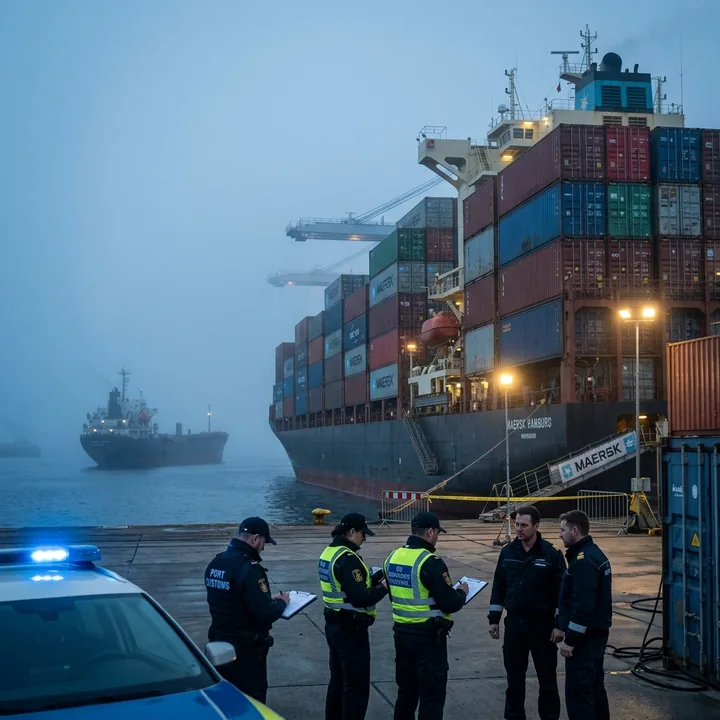
EU customs authorities are now routinely cross-referencing shipping manifests against vessel blacklists at point of arrival. Customs and Border Protection agencies across multiple EU member states have been equipped with access to Windward, Lloyd's Intelligence, and the EU's own RELEX database to run IMO number checks in real time.
The consequences of a positive match are immediate:
- Cargo is detained pending investigation
- Customs authorities may issue a formal Notice of Suspected Sanction Breach
- The importer — not just the carrier — becomes a party of interest
- Goods can be impounded for months while the competent authority determines beneficial ownership of the vessel at the time of voyage
Under EU Council Regulation 833/2014 (as amended through the 20th package), the importer's due diligence defense requires demonstrable efforts to verify vessel identity before committing to a freight arrangement. The standard is not perfection — it is reasonable commercial diligence. But "reasonable" now clearly includes IMO number verification, not merely trusting the freight forwarder's choice of carrier.
Importers who cannot demonstrate that verification was conducted at the time of booking are finding that the due diligence defense is hollow. Customs authorities are not interested in good faith. They are interested in documentation.
Section 4: The 21st Package — When Entire Freight Corridors Go Dark
The European Commission's 21st sanctions package, anticipated for June 2026, is expected to move beyond vessel-by-vessel designation to introduce corridor-level maritime services restrictions. Preliminary drafts seen by maritime trade advisors include provisions that would prohibit EU-connected logistics service providers — freight forwarders, port operators, bunker suppliers, and P&I correspondents — from servicing any vessel that has called at a designated Russian port within the preceding 12 months.
If implemented as drafted, this would effectively render entire freight corridors commercially inoperable for EU-regulated logistics chains. The Baltic, Azov, and certain Black Sea routes would become inaccessible to any freight chain touching an EU entity — including EU-based payment banks.
For importers sourcing from Central Asia, the South Caucasus, or trans-shipment hubs in Turkey and the UAE, the risk is not marginal. It is structural. Goods that today transit through compliant-seeming freight corridors may find themselves in a legally inoperable supply chain within 90 days.
The window to restructure freight arrangements — and, critically, payment arrangements — is narrow.
Section 5: IMO Number Screening Is No Longer Optional
For years, vessel-level screening was the preserve of commodity trading desks at major banks and the compliance teams of large energy companies. It required proprietary databases, specialized legal counsel, and multi-week due diligence cycles. The shadow fleet crisis has changed the calculus entirely.
IMO number screening is now a baseline requirement for any importer with ocean freight exposure, regardless of commodity, trade lane, or counterparty nationality. The EU's vessel blacklist is updated multiple times per month. Windward and Lloyd's Intelligence publish near-real-time vessel tracking. The IMO itself maintains a public GISIS database for flag state verification.
The operational challenge is integration: how do you embed a real-time vessel check into a payment workflow that was designed for speed and documentation, not regulatory screening?
This is precisely where the conventional trade finance model breaks down. Letters of credit are presented against transport documents — bills of lading that name a vessel. But the bank's documentary check does not include a live IMO screening. The importer's freight forwarder books the vessel. The importer sees the vessel name on a shipping advice. By the time the bill of lading arrives for payment, the goods are at sea and the use is gone.
The answer is not slower trade. The answer is smarter payment release — tying financial disbursement to verified compliance status at the moment of commitment, not the moment of arrival.
Section 6: How Onex Protects Importers Before the Payment Is Released
Onex was built for exactly this moment. The Onex logistics payment platform integrates real-time IMO number screening, flag state verification, and beneficial ownership cross-referencing directly into the payment release workflow — before a single dollar, euro, or dirham leaves the buyer's account.
Here is how the Onex workflow differs from conventional trade finance:
Vessel screening at commitment, not at arrival. When a freight arrangement is registered in the Onex platform, the vessel's IMO number is checked against the EU blacklist, OFAC SDN shipping annexes, UK OFSI maritime designations, and Windward's risk intelligence layer. If the vessel returns a match or a high-risk flag state indicator, the payment is held and the importer is alerted before exposure is created.
Escrow-based release tied to customs clearance verification. Onex holds buyer funds in a verified escrow structure until customs clearance documentation — including the port's confirmation of release — is uploaded and validated. The seller receives payment only when the goods are confirmed as legally cleared and accessible to the buyer. You never pay for goods you cannot receive.
Retroactive exposure alerts. If a vessel that was clean at the time of booking is subsequently added to a blacklist mid-voyage, Onex notifies the importer in real time and engages a structured dispute and hold protocol — giving the importer legal standing and documented evidence of good-faith compliance at the time of commitment.
Beneficial ownership verification. Beyond the IMO number, Onex cross-references the vessel's registered owner and commercial manager against consolidated beneficial ownership databases, reducing the risk of shell company circumvention that the blacklist itself may not yet have caught.
For importers navigating freight corridors with any exposure to the shadow fleet network — whether through direct origin risk or indirect transit risk — Onex provides the compliance infrastructure that turns a potentially catastrophic regulatory surprise into a managed, documented, and defensible transaction.
The shadow fleet crisis is not a problem for oil traders alone. It is a problem for every logistics operator with ocean freight exposure in 2026. The blacklist will keep growing. The insurance market will keep tightening. The customs authorities will keep detaining cargo.
The importers who survive this moment are the ones who embed vessel screening into their payment discipline now — not after the first void notice arrives.
Contact Onex today to integrate real-time IMO screening and escrow-based payment release into your logistics payment workflow. Your insurance policy and your customs clearance are only as strong as the due diligence you can document at the moment of commitment.
References & External Insights
-
European Union Official Journal — Consolidated Sanctions List (Maritime Vessels)
-
Lloyd's of London — Marine Insurance Market Bulletin on Sanctions Compliance
-
Windward Maritime Intelligence — Shadow Fleet Tracker & Risk Scoring
-
International Maritime Organization — Global Integrated Shipping Information System (GISIS)
-
European Commission — Transport and Maritime Sanctions Implementation Guidance
How does ONEX CRM work?
ONEX ensures secure cross-border payments and KTS defense.
Related Insights
Compliance & Routing Risk Engine
Evaluate regulatory viability, secondary sanctions risk, and projected clearing speed for your specific B2B trade corridor in 3 clicks.
Accelerate Freight & Transit Payments
Same-day settlement for sea freight, container lines, and terminal charges.
Agency Agreements & Global Freight Clearing
Protect freight pipelines from border congestion with legally compliant agency structures.